Nitrile vs Latex Gloves for Industrial Work: Which Should You Choose in 2026?
Walk into any supply house and you'll find both nitrile and latex gloves on the shelf. Both protect your hands. Both look similar. But when you're on a jobsite handling solvents, cutting pipe, or pulling wire, the wrong material choice can cost you — in skin damage, allergic reactions, or a glove that fails mid-task. Understanding nitrile vs latex gloves for industrial work is a decision worth getting right before you buy.
This 2026 guide gives trade professionals — plumbers, electricians, HVAC techs, pipefitters, and mechanics — a straight head-to-head comparison, a trade-by-trade breakdown, and our top pick stocked right here at Tool Mart Houston.
Why the Glove Material Decision Actually Matters on the Jobsite
Hand injuries account for nearly 23% of all workplace accidents in trade industries. Most are preventable with the right PPE. But "any glove" is not good enough — a latex glove exposed to cutting oil or petroleum solvent degrades within minutes, offering false protection exactly when you need it most.
The right glove depends on your hazard profile: chemical exposure, cut risk, required dexterity, and shift length. Pair the right glove with the right tools and you protect both your hands and your work quality. Browse our full range of general purpose hand tools to build a complete, safe kit — and see our in-depth Best Industrial Gloves for Mechanics guide for a full breakdown of glove types.
What Are Nitrile Gloves?
Nitrile gloves are made from acrylonitrile butadiene rubber (NBR) — a fully synthetic compound with zero natural rubber proteins. Originally developed as a medical-grade latex alternative, nitrile has since become the dominant material across industrial, automotive, construction, and trade environments worldwide.
For trade work, nitrile comes in two main formats: disposable dipped nitrile (thin, single-use) and foam nitrile coated work gloves (reusable, with a fabric liner backing). The foam nitrile coated format offers the best balance of grip, durability, and dexterity for most industrial tasks.
What Are Latex Gloves?
Latex gloves are made from natural rubber — a milky sap harvested from rubber trees. They've been a standard in medical and light-industrial settings for decades, valued for exceptional elasticity and a "second skin" feel that supports fine-detail work.
The critical limitation: latex contains natural proteins that trigger allergic reactions in a significant portion of the population. As of 2026, OSHA guidelines strongly favor eliminating latex from shared-use environments. Beyond allergy risk, latex degrades rapidly when exposed to oils, petroleum products, and common solvents — all daily realities on trade jobsites.
Nitrile vs Latex — Head-to-Head Comparison
Chemical & Oil Resistance
Nitrile wins decisively. It resists petroleum products, mineral oils, greases, hydrocarbons, solvents, and diluted acids — exactly the chemicals plumbers, mechanics, and HVAC techs encounter daily. Latex degrades rapidly on contact with these substances, swelling and softening within minutes of exposure to motor oil or brake fluid.
Puncture & Cut Resistance
Industrial-grade nitrile offers 3–5× the puncture resistance of comparable latex. For work involving sharp pipe ends, metal fittings, wire ends, or cutting tools, nitrile provides meaningfully better mechanical protection. Foam nitrile coated work gloves — with their woven liner backing — add an additional layer that bare latex cannot match.
Dexterity and Tactile Sensitivity
Latex has the traditional edge here. Its natural elasticity delivers a "second skin" feel that nitrile historically couldn't match. However, modern 13 and 15-gauge foam nitrile coated gloves have largely closed this gap. For the vast majority of trade tasks — threading fittings, torquing bolts, pulling wire, pressing connections — a quality foam nitrile glove gives you all the dexterity you need.
Allergy Risk
This is non-negotiable for crew environments. Latex allergy affects an estimated 1–6% of the general population and up to 17% of healthcare workers, with reactions ranging from contact dermatitis to anaphylaxis. Nitrile is fully hypoallergenic — no natural proteins, zero allergy risk. On any shared-crew jobsite, nitrile eliminates liability and protects every worker regardless of their allergy history.
Cost Per Day of Protection
Latex appears cheaper per unit at checkout. But in real-world testing across construction and automotive environments, nitrile gloves average 3–4 weeks of daily use before significant wear — versus 1.5–2 weeks for comparable latex. That 2× lifespan difference flips the value equation: nitrile costs less per day of protection across a full work season.
Quick-Reference Comparison Table
| Category | Nitrile | Latex |
|---|---|---|
| Chemical / Oil Resistance | ✅ Excellent | ❌ Poor |
| Puncture Resistance | ✅ High (3–5× latex) | ⚠️ Moderate |
| Dexterity / Tactile Feel | ✅ Very Good (modern grades) | ✅ Excellent |
| Allergy Risk | ✅ None (latex-free) | ❌ Yes (natural proteins) |
| Durability / Lifespan | ✅ 3–4 weeks daily use | ⚠️ 1.5–2 weeks daily use |
| Cost Per Day | ✅ Lower (longer lifespan) | ⚠️ Higher (frequent replace) |
| ANSI-Rated Variants Available | ✅ Yes (A1–A4 cut levels) | ⚠️ Limited |
Which Glove Is Right for Your Trade?
The right material depends on your daily hazards. Here's a trade-by-trade breakdown. For a broader equipment overview, see our Industrial Tool Set Recommendations for Professionals (2026).
| Trade | Primary Hazard | Recommended |
|---|---|---|
| Mechanic | Oils, solvents, sharp metal | Nitrile foam coated |
| Plumber | Pipe dope, cutting oil, sharp fittings | Nitrile foam coated |
| Electrician | Wire pulling, precision connections | Nitrile 15-gauge thin coat |
| HVAC Tech | Refrigerants, sharp sheet metal | Nitrile cut-resistant A3 |
| Pipefitter | Cutting oil, pipe ends, heat exposure | Nitrile foam coated |
| Light Assembly / Inspection | No chemical exposure, fine detail work | Latex (if no allergy risk) |
Our Top Nitrile Pick for Industrial Work
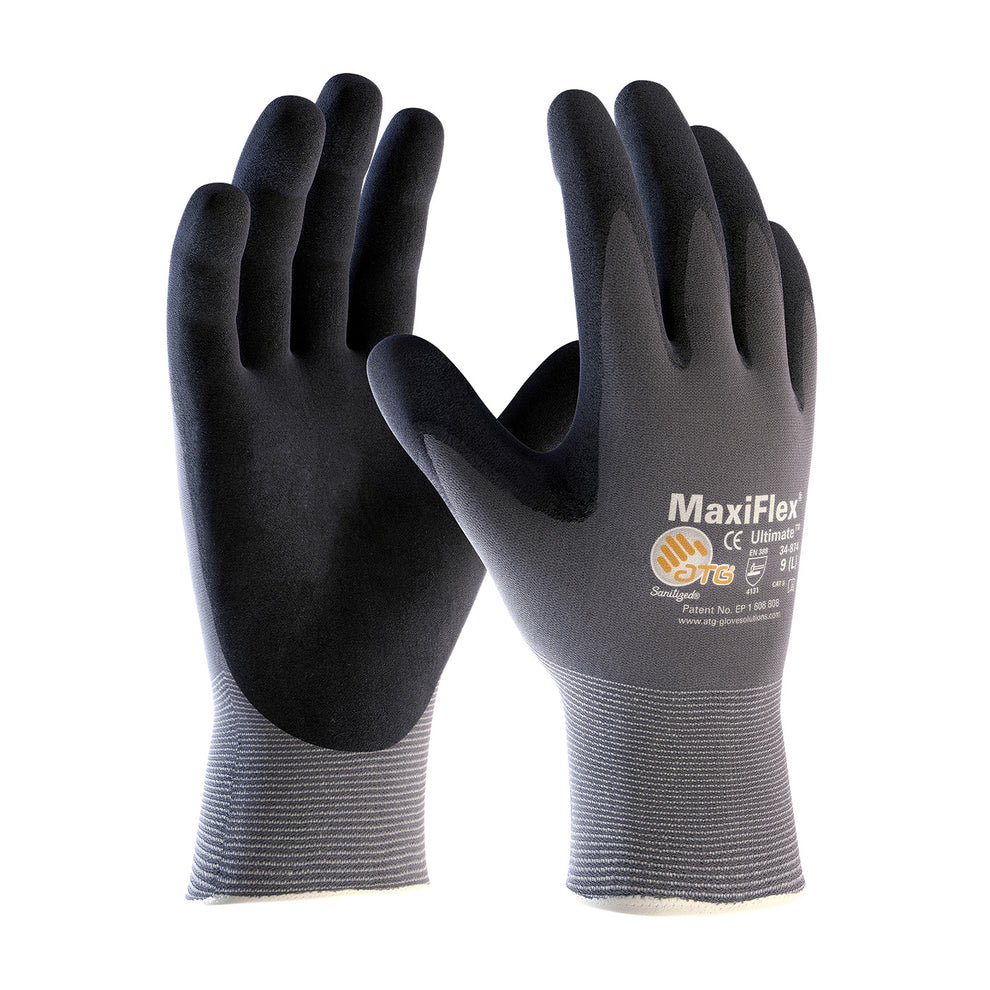
For trade professionals who need a nitrile glove they can rely on shift after shift, the Maxiflex PIP 34-874 is the benchmark. It's the glove we stock at Tool Mart Houston specifically because it hits every mark: wet-surface grip, dexterity, durability, and all-day comfort.
Care & Maintenance — Making Your Gloves Last
Wash after every shift. Foam nitrile coated gloves are machine washable in cold water on a gentle cycle. Air dry only — heat degrades both the coating and the liner.
Inspect before each use. Check for delamination, coating wear-through, and tears. A compromised glove provides false protection — replace immediately.
Store away from UV and ozone. Direct sunlight and ozone emitted by motors or generators degrade rubber coatings rapidly. Store in a cool, dry drawer or toolbox.
Match the glove to the chemical. Foam nitrile handles oils and light solvents — not concentrated acids or ketones. Always verify chemical compatibility before use.
Good PPE habits go hand-in-hand with overall jobsite discipline. Read our guide to maintaining your power tools for longevity and our tips on 5 proven ways to maximize jobsite productivity.
ANSI & Safety Standards for Industrial Gloves
ANSI/ISEA 105-2016 — The primary U.S. hand protection standard. Rates cut resistance (A1–A9), puncture resistance (1–5), and abrasion resistance (1–6). The Maxiflex PIP 34-874 is ANSI/ISEA 105 compliant.
ANSI/ISEA 138-2019 — Covers impact protection. Look for Level 2 or Level 3 if you operate impact wrenches or work near crush hazards.
EN 388:2016 — European mechanical hazard standard. A four or five-digit rating (e.g., 4131X) indicates cut, tear, abrasion, and puncture performance levels.
Important note for electricians: standard nitrile gloves provide zero protection against electrical shock. Live electrical work requires voltage-rated insulating gloves per ASTM D120 (Class 00–Class 4). Browse our utility and electrician tools collection for proper electrical PPE.
Shop Hand Protection at Tool Mart Houston
Tool Mart Houston stocks professional-grade hand protection alongside the power tools and trade equipment your crew already relies on. Everything below is available in-store and online.
Frequently Asked Questions
Is nitrile better than latex for industrial work?
For the vast majority of industrial tasks — yes. Nitrile outperforms latex in chemical resistance, puncture resistance, durability, and allergy safety. The only area where latex still leads is ultra-fine tactile sensitivity, which is rarely the priority in trade environments.
Can I use nitrile gloves for electrical work?
Standard nitrile work gloves offer zero protection against electrical shock. Live electrical work requires voltage-rated insulating rubber gloves (Class 00–Class 4 per ASTM D120). Nitrile coated work gloves are fine for mechanical tasks on de-energized electrical equipment.
Are latex gloves still used in construction in 2026?
Rarely. Most commercial contractors have transitioned fully to nitrile to eliminate allergy risk and improve chemical resistance. Latex still appears in some light-assembly and food service settings with minimal chemical exposure.
How long do nitrile coated work gloves last?
With proper care — washing after each shift, air drying, proper storage — quality foam nitrile gloves like the Maxiflex PIP 34-874 last 3–4 weeks of daily use. Inspect before each use and replace the moment you see coating wear-through or delamination.
What nitrile gloves does Tool Mart Houston carry?
Tool Mart Houston stocks the Maxiflex PIP 34-874 Ultimate Foam Nitrile Gloves — one of the most trusted nitrile coated work gloves in the trade industry. Visit us in store or contact our team for current sizing availability.
Final Verdict — Nitrile Wins for Industrial, But Know the Exceptions
For every trade professional working with oils, solvents, sharp materials, or mixed-crew environments, nitrile is the correct choice in 2026. Better chemical resistance, better puncture resistance, zero allergy risk, and a real cost advantage over a full work season.
Latex still earns its place in light-duty, low-hazard applications where maximum tactile sensitivity matters and there's zero chemical exposure. But that describes very few scenarios in a real trade or industrial environment.
Start with the Maxiflex PIP 34-874 for your general trade work. Layer in specialized gloves — cut-resistant, impact-rated, or heat-resistant — for specific hazards on top.
Protect your hands. The right glove is the one that matches your actual risk — not just the closest bin on the shelf.
Need help choosing the right glove for your crew?
Houston's trade tool experts — in store and online, ready to help you spec the right protection.