Types of Drill Bits: The Professional's 2026 Guide for Trade Contractors
Grab the wrong drill bit on a concrete anchor or an EMT conduit run and you'll know within seconds — a spinning tip that won't bite, a cracked tile, or a blown bit that costs you time and money you can't get back. This guide breaks down the 7 most important types of drill bits used across the trades in 2026, what each one is built for, and how to match the right bit to every material you'll face on the jobsite — whether you're an electrician, plumber, HVAC tech, pipefitter, or general contractor working in Houston.
Why Choosing the Right Drill Bit Matters on the Jobsite
A drill bit mismatch isn't just inefficient — it's expensive. An HSS twist bit on concrete dulls in under 30 seconds. Forcing a standard bit through hardened steel snaps the tip and can send fragments flying. The right bit drills faster, lasts longer, and protects your drill motor from overload. If you're stocking a van or outfitting a crew, start with the professional power tools collection at Tool Mart Houston to make sure your drill platform and bits are properly matched.
Before selecting any bit, identify your material — wood, metal, masonry, tile, or composite. Then match the bit's construction, coating, and shank type to the task. Our Best Cordless Drills for Contractors (2026) guide covers which drill platforms pair best with each bit category — worth reading before you spec a new kit.
7 Types of Drill Bits Every Trade Pro Should Know
1. Twist Drill Bits — HSS & Cobalt
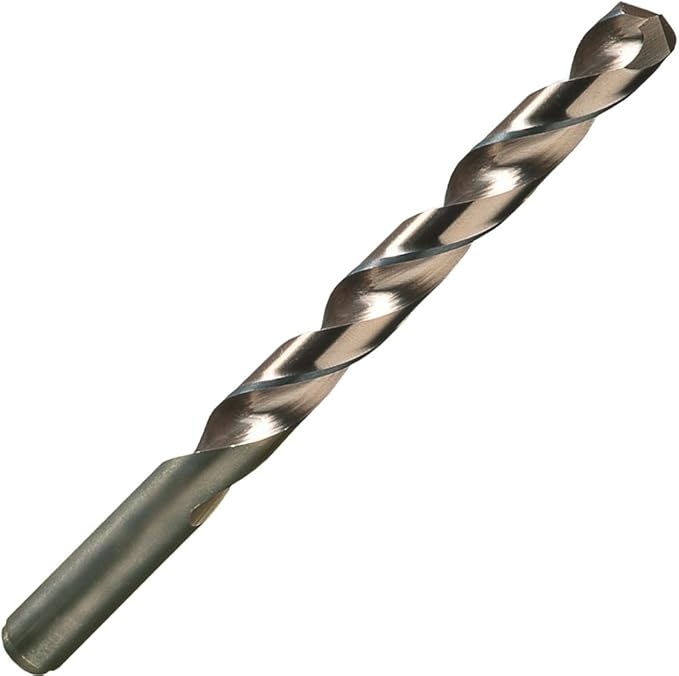
Twist bits are the workhorses of any toolbox. Available in High-Speed Steel (HSS) and cobalt alloy grades, they handle wood, plastic, aluminum, and steel across hundreds of applications per day. For trade professionals drilling through mild steel conduit hangers, metal studs, or aluminum enclosures, cobalt twist bits — specifically HSS-Co M42 grade with a 135° split point — are the professional standard.

The 135° self-centering geometry eliminates walking without a center punch and cuts faster through hardened material than a standard 118° tip. Champion's 705C cobalt series delivers the edge retention and heat resistance that Houston tradespeople depend on shift after shift.
2. SDS-Plus & SDS-Max Rotary Hammer Bits
SDS (Slotted Drive System) bits are built exclusively for rotary hammers. The slotted shank locks into the chuck while allowing axial movement — delivering impact force through concrete, block, and brick without transferring shock to your wrist. SDS-Plus handles bore diameters up to 1" in standard concrete; SDS-Max is the heavy hitter for anchor holes in structural concrete and diameters above 1". Electricians anchoring panel boxes, plumbers setting sleeve anchors for pipe hangers, and HVAC techs penetrating CMU walls all depend on SDS daily. Milwaukee M2 SDS-Plus 1/4"×6" Bit (48-20-7431) at Tool Mart Houston → is engineered with a 2-cutter carbide head for faster penetration and longer service life in demanding masonry work. See the full Milwaukee collection at Tool Mart.
3. Spade / Installer Bits
Spade bits (paddle bits) cut large-diameter holes through wood framing fast. Electricians use them to run wire through 2×4 and 2×6 studs; plumbers size up to 2½" for drain and supply line penetrations through floor joists. Installer bits are the long, flexible extension variant used specifically for fishing wire through tight cavities and top plates. Spades are wood-only — never use them on metal or masonry. Choose a bit with a threaded lead tip to pull through quickly without pushing hard on the drill. The Utility & Electricians Tools collection at Tool Mart covers spades, installers, and the drill platforms that run them.
4. Step Drill Bits
Step bits cut multiple hole sizes with a single tool — essential for sheet metal, electrical panels, and junction box knockouts. One step bit replaces an entire set of individual twist bits for thin steel work up to 3/16". The stepped geometry prevents the catch and binding that occurs with twist bits in sheet stock. Electricians use them constantly for conduit knockouts and enclosure penetrations. They work on aluminum, mild steel, and plastic — not masonry. If you're not sure how to read the RPM and torque specs stamped on your drill to safely run step bits, the How to Read Power Tool Specifications guide has you covered.
5. Masonry / Carbide-Tipped Bits
Standard masonry bits use a carbide-tipped flat head to grind through concrete, brick, and cinder block using percussion action — not rotary cutting. Use these with a standard hammer drill, not a rotary hammer. They're best for lighter anchor and fastener holes up to 5/8" in standard block. For deeper bore requirements or reinforced concrete, step up to SDS-Plus. Run hammer drills at the correct torque setting — too much speed burns the bit; too little and you're just grinding without cutting. See our Top Tools for Concrete Work (2026) guide for the full setup.
6. Hole Saws
Hole saws cut large-diameter through-holes in wood, drywall, metal, and tile. HVAC techs use them for ductwork penetrations; plumbers rely on them for rough-in; electricians use them for recessed boxes and conduit entry points. Bi-metal hole saws handle wood and steel; carbide-grit saws tackle tile and fiber cement. Always use a pilot drill to center the saw — and keep RPMs low on metal cuts to prevent heat buildup that destroys the blade. Champion 705SP Heavy Duty Jobber Drill at Tool Mart Houston → is a reliable pilot bit for larger hole saw work.
7. Brad Point Bits
Brad point bits feature a center spur that anchors the bit perfectly in wood, plus two outer spurs that score a clean hole edge before the flutes clear material. The result is a flat-bottom, clean-entry hole — critical for finish carpentry, cabinet work, and precision wood connections. These are wood-only bits. Don't use them on metal, masonry, or composite. They're the right call any time hole quality matters more than speed.
Key Features to Look For When Buying Drill Bits
Material & Coating
The bit's material determines heat tolerance, edge life, and material compatibility. Here's how the main options stack up:
| Bit Material / Coating | Best For | Max Heat Resistance | Cost Tier |
|---|---|---|---|
| Uncoated HSS | Wood, plastic, soft metal | ~350°F | $ |
| Black Oxide HSS | Wood, mild steel, PVC | ~450°F | $$ |
| Titanium Nitride (TiN) | Steel, aluminum, hardwood | ~600°F | $$ |
| Cobalt (HSS-Co M42) | Stainless, hardened steel, cast iron | ~900°F | $$$ |
| Carbide-Tipped | Concrete, masonry, tile | N/A — abrasive grinding, not heat-driven | $$$$ |
Shank Type
Round shanks fit standard keyless chucks. Hex shanks (1/4") lock into impact drivers — convenient for light work but limit torque transfer for heavy drilling. SDS-Plus and SDS-Max shanks are for rotary hammers only — never force them into a standard drill chuck. Matching shank to platform is non-negotiable; the wrong combination destroys both the bit and the chuck.

Point Geometry
118° standard points suit general-purpose wood and soft metal work. 135° split points are self-centering and purpose-built for metal — no center punch required, and they require significantly less downward pressure to start cutting. If you're drilling metal without a split point, you're fighting the bit from the first contact. For production drilling in steel, 135° is the only geometry worth stocking.
Match the Bit to the Job — Trade-by-Trade
| Trade | Common Job | Recommended Bit | RPM Range |
|---|---|---|---|
| Electrician | Running wire through wood studs & plates | Spade / Installer Bit | 600–1,200 RPM |
| Electrician | Panel knockouts in sheet steel | Step Drill Bit | 500–900 RPM |
| Plumber | Drilling joists for supply & drain lines | Spade Bit (1½"–2½") | 400–800 RPM |
| HVAC Tech | Ductwork penetrations in wood / drywall | Hole Saw (Bi-Metal) | 300–600 RPM |
| HVAC / Pipefitter | Anchoring into concrete slab or CMU wall | SDS-Plus Carbide Bit | 0–900 RPM (hammer mode) |
| Contractor | Drilling through metal studs & steel framing | Cobalt Twist Bit (135° split point) | 300–600 RPM |
| General Contractor | Multi-material pilot holes & fastener prep | HSS Twist Bit (118°) | 800–1,500 RPM |
Drill Bit Care & Maintenance
A sharp bit drills faster, runs cooler, and puts less strain on your drill motor. Dull bits are the leading cause of overheating, blown motors, and off-spec holes. Keep your bits performing at full spec with these practices:
- Clean bits after every use — remove metal shavings and wood resin with a dry cloth or wire brush before storage.
- Store in indexed rolls or indexed holders — loose bits in a bucket dull each other's edges and chip tips.
- Use cutting oil on cobalt bits when drilling steel — it drops heat buildup significantly and extends edge life per hole.
- Resharpen HSS and cobalt bits with a dedicated bit sharpener — quality cobalt bits can be resharpened multiple times before retirement.
- Replace bits showing tip rounding, chipped carbide, or heat discoloration — a dead bit costs more in motor wear than the bit itself is worth.
For a complete jobsite toolkit care protocol, read the Power Tool Maintenance Guide: Cleaning, Battery & Storage and How to Maintain Your Power Tools for Longevity — both cover the routines that keep professional tools running at spec for years.
Drill Bit Standards & Specs Explained
ANSI B94.11 governs dimensional standards for twist drill bits sold in the U.S. — covering shank diameter tolerances, flute geometry, and overall length specifications. When you buy from a professional supplier like Tool Mart Houston, ANSI-compliant bits are the baseline. Off-brand bits without ANSI markings can run oversized or undersized, causing sloppy fit in chucks and imprecise holes that don't pass inspection.
Cobalt grades matter: HSS-Co M35 contains 5% cobalt and handles most tough steel applications; M42 with 8% cobalt is the superior grade for hardened steel, stainless, and continuous production drilling. M42 costs more up front but holds its edge through significantly more holes — the economics favor it for any crew drilling metal daily. The Champion 705C series runs M42 grade throughout the bit body, meaning every resharpen restores full cobalt hardness.
For SDS shanks, the DIN 8079 standard governs slot geometry: SDS-Plus uses a 10mm shank and is the trade standard for most anchor and conduit work in concrete; SDS-Max uses an 18mm shank for structural concrete and heavy demolition anchoring. The two systems are not interchangeable — chucks and bits must match. Titanium surface coatings (TiN, TiCN, TiAlN) extend edge life on coated bits, but once the bit is resharpened past the coating layer, that benefit is gone. Cobalt alloying runs through the entire steel body — the heat resistance and hardness remain after every resharpen.
Where to Buy Drill Bits in Houston
Tool Mart Houston stocks professional-grade drill bits from Champion, Milwaukee, Bosch, and more — the brands your foreman trusts and your supplier stocks. Shop online through the Power Tools collection or visit us in-store in Houston for hands-on advice from our trade specialists. Need bulk pricing for a crew or project bid? Request a quote and we'll build a package to spec.
Frequently Asked Questions
What drill bit do I use for concrete?
Use a carbide-tipped masonry bit in a hammer drill for anchor holes up to 5/8" in standard block. For larger diameters, deeper penetrations, or reinforced concrete, switch to an SDS-Plus bit in a rotary hammer. Never run an HSS twist bit on concrete — it won't cut and will burn out in seconds.
What is the difference between SDS-Plus and SDS-Max?
SDS-Plus has a 10mm shank and handles holes up to 1" in standard concrete — the right tool for most trade anchor and conduit work. SDS-Max uses an 18mm shank and handles 1"+ bore diameters in structural concrete and heavy demolition. They are not interchangeable — the chuck design is completely different for each system.
Can I use a twist bit on tile or masonry?
No. An HSS twist bit will skate across tile glaze, generate heat, and shatter the surface. For tile, use a carbide spear-point or diamond-core bit at low RPM with no percussion mode. For masonry, use a carbide-tipped masonry bit with hammer action — rotary-only mode on concrete accomplishes nothing.
How do I know when a drill bit needs to be replaced?
Replace a bit when it requires noticeably more pressure to start cutting, produces smoke or a burning smell in wood, skates on metal instead of biting immediately, shows a visibly rounded or chipped tip, or the flutes won't clear chips cleanly. A dull bit also generates excess heat that damages your drill motor — retire it before that cost becomes real.
What drill bits do electricians use most on the job?
Electricians rely most on spade and installer bits for running wire through wood framing, step drill bits for panel and enclosure knockouts in sheet steel, SDS-Plus bits for concrete anchor holes, and cobalt twist bits for drilling through metal conduit bodies and strut. A solid van kit covers all four categories — browse the Utility & Electricians Tools collection at Tool Mart to stock yours right.
Final Recommendation
There's no single drill bit that does it all — and any contractor who's tried to make one work across every material already knows what that costs in wasted time and blown tips. The professional move is to stock the right four-category kit: cobalt twist bits for metal, SDS-Plus bits for concrete, spade bits for wood framing, and step bits for sheet steel. Those four categories cover 95% of trade drilling scenarios across every discipline on a commercial or residential jobsite.

For crew outfitting or project-quantity pricing, the Champion collection at Tool Mart Houston offers professional-grade twist and jobber bits at trade pricing. Pair them with Milwaukee's SDS-Plus line and you have a complete drilling solution for any material. And if you want to sharpen the rest of your jobsite operation beyond bit selection, 5 Proven Ways to Maximize Jobsite Productivity is worth the read.
Bottom line: match the bit to the material, run it at the right RPM, and replace it before it costs you more than it's worth. Tool Mart Houston has the professional drill bits you need — in stock, trade-priced, and ready to work.
Stock the Right Drill Bits for Every Trade Job.
Champion, Milwaukee, Bosch & more — in stock at Tool Mart Houston, trade-priced and ready to ship.